Post-Trade ReviewChecklist
A practical checklist for trading journals: trade facts, notes, screenshots, tags, execution quality, and follow-up actions.
Start free trial in MadlyticsA useful trade review starts before memory rewrites the trade. This checklist keeps the review focused on what happened, what you planned, what changed, and what deserves attention after several trades are logged.
Checklist method and limitations
Reviewed July 22, 2026.
Use broker-confirmed facts first, add the original plan and chart context, compare planned and actual execution, and only then group several trades for pattern review. This checklist organizes evidence; it does not grade a strategy or predict a result.
Manual entries can be incomplete or inaccurate. Product screenshots show the current interface with illustrative demonstration trade data, not customer results. Check the pre-trade calculator methodology and manual journal workflow.
Use this after the trade closes
This checklist is for post-trade review. It is not a trade signal, a prediction tool, or investment advice. Use it after the trade is closed to organize the context you want to review later.
Treat post-trade record keeping as the factual layer: save the entry, stop, exit, size, fees, notes, and chart context before interpreting the outcome. Position sizing belongs before entry; the journal and analytics review happen afterward, when you can compare the record with what actually happened.
The checklist
1. Record the trade facts
Start with the fixed facts so the review is not shaped by memory, emotion, or the final result.
- Instrument or market traded
- Open and close time
- Long or short direction
- Entry, stop, target, and exit
- Position size and planned risk
- Final result in the same unit used for review
2. Write the original trade idea
Write this before judging the result so the original reason for the trade stays separate from hindsight.
- Why the trade was taken
- What setup, context, or condition made it valid
- What would have invalidated the trade
- Whether the trade matched the plan before entry
3. Attach chart context
Keep the visual evidence close to the trade so you can review what you saw at the time, not what you remember later.
- Screenshot before or near entry when available
- Screenshot after close when it adds useful context
- Notes about structure, volatility, or key levels
- Context that would be hard to reconstruct later
4. Tag what matters
Keep tags simple enough to reuse consistently; inconsistent labels make later pattern review harder.
- Setup type
- Market condition
- Execution quality
- Rule followed or rule broken
- Review theme such as late entry, moved stop, missed target, or clean execution
5. Review execution, not just outcome
A trade can make money and still be poorly executed. It can also lose money while following the plan. Review the process first.
- Did entry match the plan?
- Did stop and target placement match the plan?
- Was position size consistent with planned risk?
- Was the exit planned, adjusted, or emotional?
- What would you repeat and what would you change?
6. Look for patterns after several trades
One trade is usually too small a sample. Use batches of trades to find repeated behavior worth reviewing.
- Which setups appear most often?
- Which contexts are followed well or poorly?
- Where does planned risk drift from actual behavior?
- Which tags deserve more attention in the next review?
7. Decide the next review action
End the review with one practical follow-up so the journal turns into a repeatable review habit.
- One behavior to repeat
- One mistake or friction point to watch
- One setup or context to review again later
- Whether the trade needs a follow-up note after more data
How this looks in Madlytics
The checklist works best when the trade record, notes, screenshots, tags, and analytics stay connected. That way review starts from evidence instead of scattered files and memory.
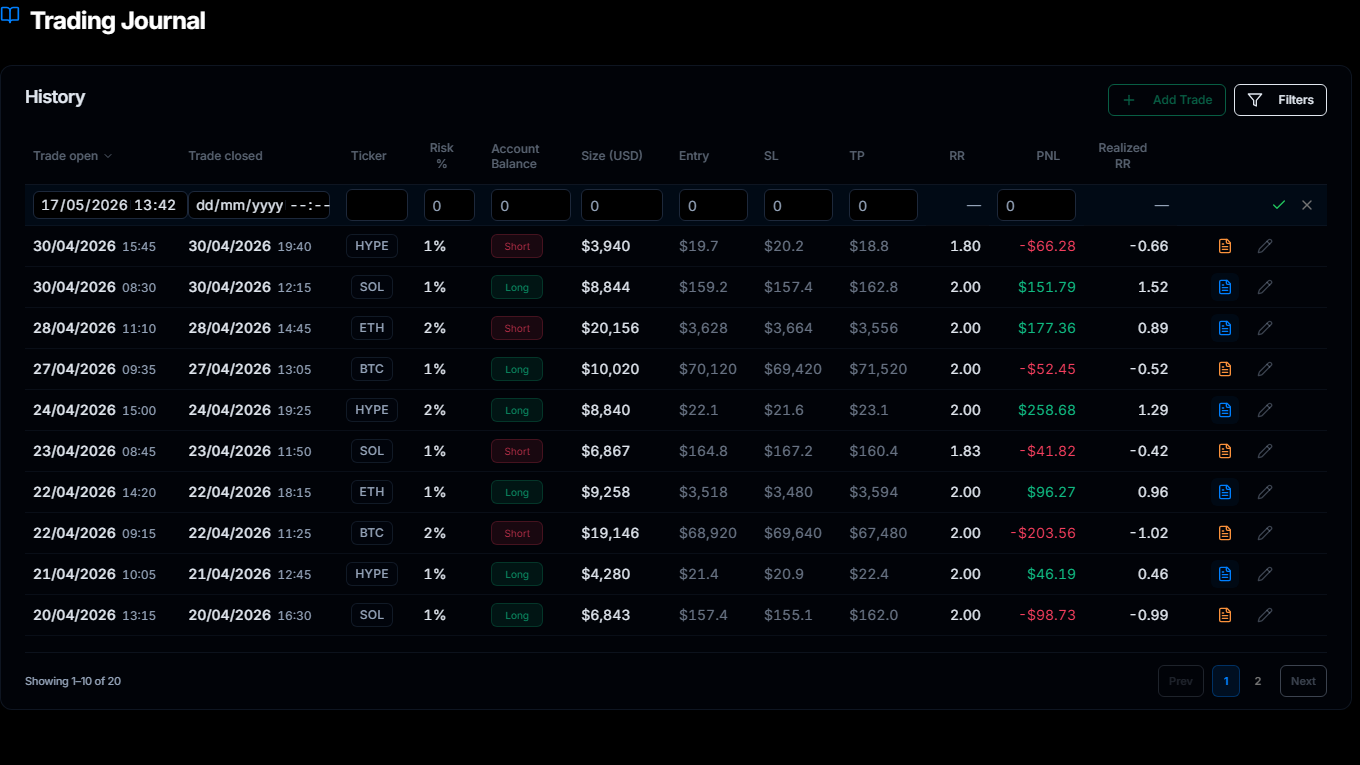
Trade record
Start with the fixed trade record so the review has a factual base before notes or emotions enter the process.
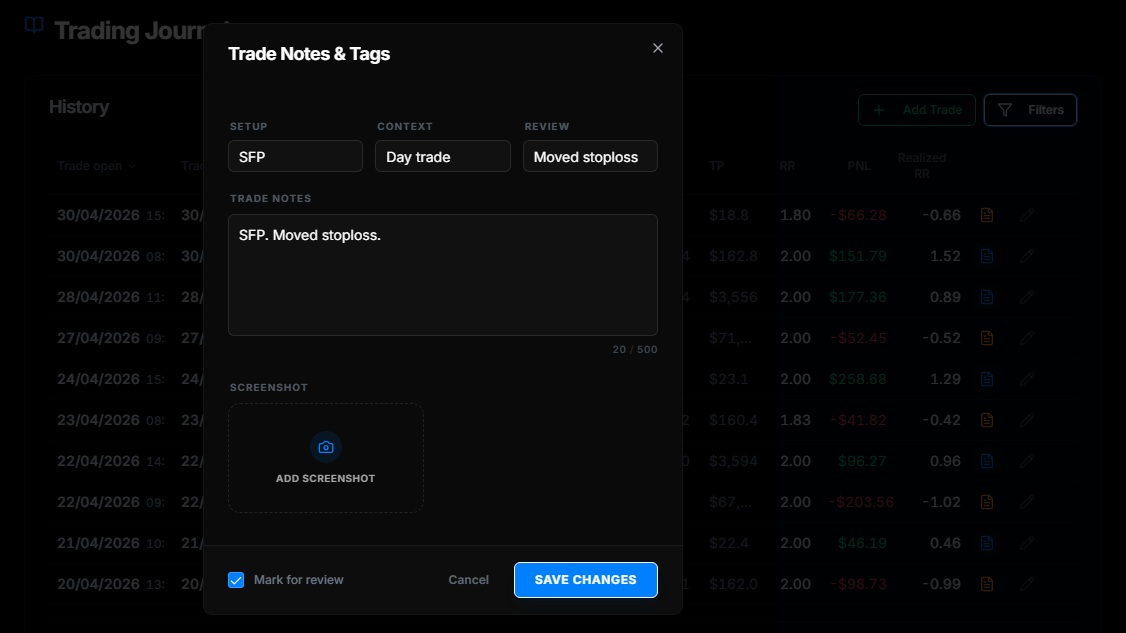
Notes and screenshot context
Attach setup notes, context tags, review tags, and screenshots while the trade is still fresh.
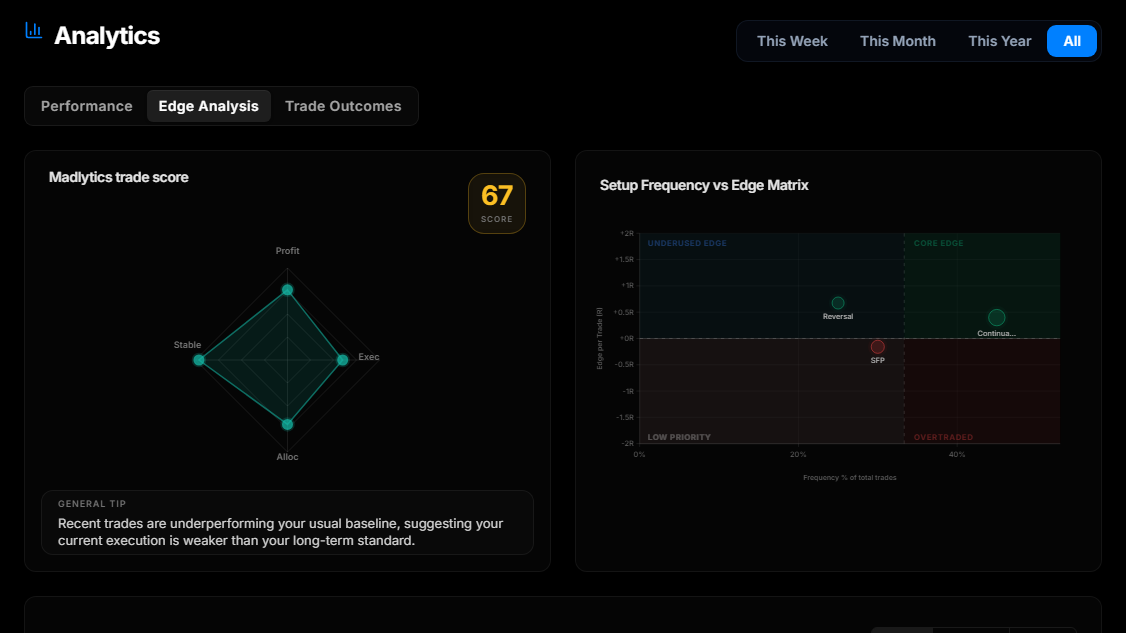
Analytics follow-up
After several trades, use analytics to check repeated setups, contexts, and behaviors instead of overreacting to one result.
Keep the review small enough to repeat
A checklist fails when it becomes too heavy. You do not need a long essay after every trade. You need enough structure to make a later review useful.
Start with the fixed trade facts, add the context that will be hard to remember later, then choose one practical follow-up. That is usually enough to make the next review easier.
Where this fits with the rest of the workflow
If you are still deciding what a journal should track, start with the trading journal guide or the trading journal template. If you want the full review process, use the trade review guide.
If you are choosing the tool that will hold this checklist, compare options with the best trading journal criteria. The useful test is whether the journal keeps checklist fields, screenshots, risk context, tags, and analytics in the same review workflow.
For pre-trade planning, use the position size calculator. For the broader process around planned risk, sizing, and later review, read about risk management in trading.
Insight
A checklist is useful only if it changes what you can review later.
The point is not to write more. The point is to preserve the facts and context that help you review decisions without rebuilding the story from memory.
Scenario
A simple review example
A trader closes a losing trade and records the fixed trade facts first. They add the original setup idea, attach the chart screenshot, and tag the trade as a late entry.
One trade does not prove much. But after several similar trades, the tag and screenshots make it easier to review whether late entries are a repeated issue or just a one-off mistake.
Madlytics keeps checklist context connected
Madlytics helps keep trade records, notes, screenshots, tags, and analytics in one review workflow, so post-trade review does not start from scattered files.
Frequently asked questions
What is a post-trade review checklist?
What should I review after a trade?
Should I review every trade?
Is post-trade review the same as risk planning?
Does using a checklist improve trading results?
Turn your next closed trade into reviewable context
Use Madlytics to keep the trade record, notes, screenshots, tags, and analytics connected from the moment the trade is logged.